How AI is Deciding Who Makes the Buyer Shortlist
Your next client is using AI to research where to spend their money. If you don't know how it works, you won't make the shortlist.
How Are People Buying Things in 2026?
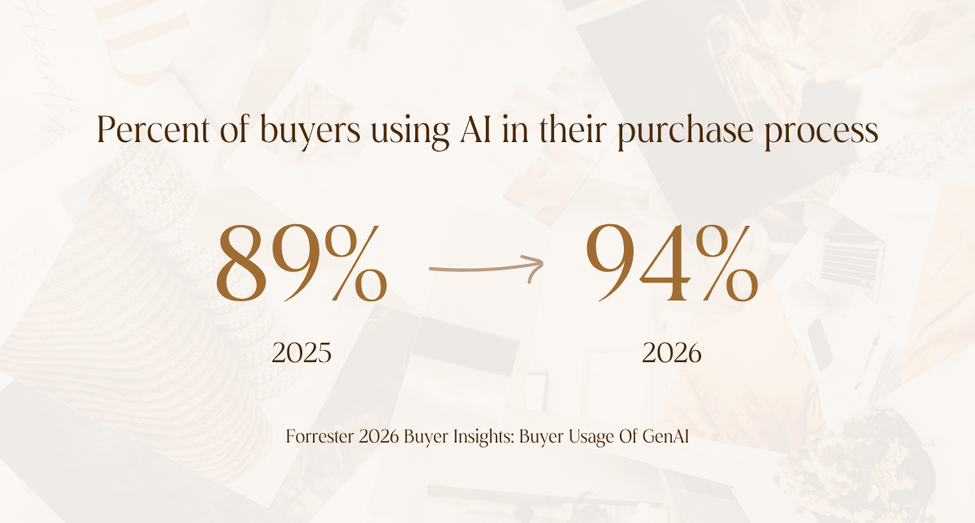
I recently came across Forrester's January 2026 report on buyer behavior, and a couple of numbers stopped me in my tracks. According to the report,
94% of buyers are now using AI in their purchase process, up from 89% last year.
And arguably more importantly,
61% of the buying journey is completed before a buyer ever contacts a vendor.
AI Creates the Shortlist
By the time someone reaches out to you, they've already done most of their research. They've already formed an impression, and they're close to committing to a purchase. AI did a lot of that work for them.
The Buying Journey Has Changed
Before, a customer’s journey may have looked something like: search Google, check your Google reviews, land on your website, read some case studies, maybe reach out.
Now buyers are asking ChatGPT or Perplexity, getting a synthesized answer, then verifying their options with peers and industry contacts. Vendors are largely cut out of that verification process.
Where are AI Engines Gathering Data From?
AI engines don't pull from vendor websites as a primary source. First, they pull from sources they already deem credible—which means earned media, third-party features, and publications carry more weight than your business' website right now.
And according to a State of Brand report from April 2026, LinkedIn is currently the second most-cited domain across ChatGPT Search, Google AI Mode, and Perplexity. Ahead of Wikipedia. Ahead of every major news publisher.
LinkedIn-based thought leadership content not only aids brand awareness and alignment with silent decision-makers, it's also what's scraped by AI engines to generate summaries of what your brand stands for and who you help.
The Window for Early Adoption Is Still Open
72% of marketing leaders expect AI to surpass SEO as the primary visibility channel within three years. Fewer than one in four marketers have done anything about it yet. Most small businesses are in that second group.
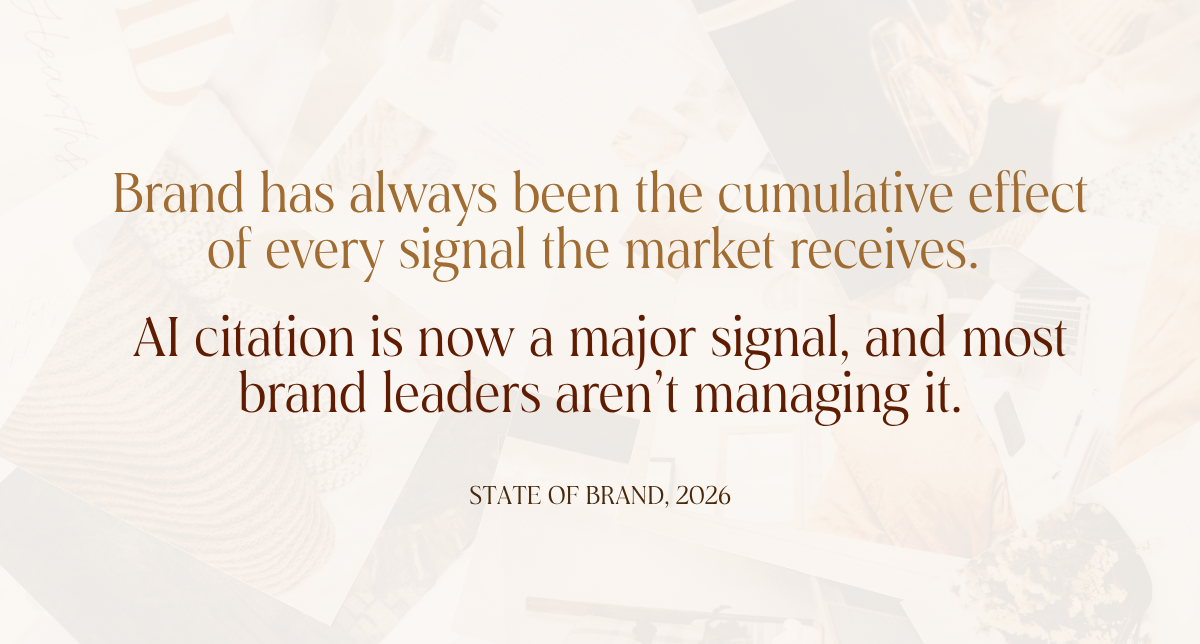
The brands that do start showing up in AI answers aren't just getting more visibility, their leads are warmer. According to Exposure Ninja's March 2026 analysis, AI search traffic converts at 14.2% compared to Google organic's 2.8%.
The ones who start showing up consistently and intentionally—with a real perspective and and strategically-aligned content—have a meaningful head start.
You don't have to overhaul everything today. But it's worth asking:
If someone searched for what you do today with AI, what would they find? Would you even be on the radar?
Want to Stay on Top of Trends?
If this is the kind of thing you want to stay ahead of, I write about brand strategy, visibility, and the behind the scenes of building a small business in The Hearth, my monthly newsletter for small business owners. Subscribe to get the next edition here.
Frequently Asked Questions
How is AI changing the way people find and hire service providers?
Buyers are increasingly starting their research with AI tools like ChatGPT and Perplexity rather than Google. Instead of clicking through multiple websites, they ask a question and get a synthesized answer with a shortlist of recommended providers baked in. If you're not showing up in those AI-generated answers, you may never get the chance to make your case.
What does AI use to decide which businesses to recommend?
AI engines don't primarily pull from business websites. They lean on sources they already consider credible, such as earned media, third-party features, industry publications, and platforms like LinkedIn. Research from 2026 found that LinkedIn is currently the second most-cited domain across ChatGPT Search, Google AI Mode, and Perplexity, ahead of Wikipedia and major news publishers. That means your LinkedIn presence and any external coverage of your business carry significant weight in whether AI tools surface you to potential buyers.
What is generative engine optimization (GEO) and do small businesses need to care about it?
Generative engine optimization, or GEO, is the practice of structuring your content and online presence so that AI tools are more likely to cite and recommend you in their responses. It builds on traditional SEO rather than replacing it. Things like clear, specific content, a consistent brand presence across platforms, and credible external mentions all contribute. Small businesses don't need to overhaul everything at once, but understanding that AI is now part of how buyers research purchases means it's worth starting to think about how your brand shows up in that context.
How do I get my small business to show up in AI search results?
The most practical starting points are: publishing consistent, specific content on your website and LinkedIn that clearly explains who you help and how; earning mentions or features on third-party sites your industry trusts; and making sure your brand language is consistent across every platform so AI tools can build a coherent picture of what you do. AI engines reward clarity and credibility—the same things that make a human buyer trust you tend to be the same things that make AI more likely to recommend you.
Is SEO still worth investing in for small businesses?
Yes, traditional SEO is still the foundation for staying visible online. Optimizing for AI search builds on top of it rather than replacing it. Google's own guidance confirms there's no separate strategy for AI search; the fundamentals of good SEO (clear structure, quality content, credible links, consistent named entities) are what drive visibility in both traditional and AI-generated results. The difference is that AI search rewards topical depth and citable, specific claims even more than traditional SEO does.
Aliya Mooney is a brand identity designer and strategist based in Boise, Idaho, and the founder of Hearthstone Creative. With a B.A. in Advertising and a background in in-house design, boutique agency work, and brand strategy, she works with established small business owners and values-driven founders to build brand identities that are strategic, intentional, and built to last. Learn more about Aliya here.