What's the Difference Between a Brand System and a Logo?
If your branding feels scattered despite having a logo, this is probably why.
You started with a logo. Maybe you designed it yourself, hired someone early on when the budget was tight, or pieced something together to get moving. It worked well enough at the time.
But somewhere along the way, things got inconsistent. Your Instagram looks different from your website. Your proposals don't quite match your other materials. You've tweaked your colors more than once because nothing ever felt fully settled. And when you try to hand something off to another person to design, there's no clear reference for them to work from.
That's a brand system problem, not a logo problem. Understanding the difference is the first step toward fixing it.
A logo is one piece. A brand system is the whole picture.
A brand identity system is designed to evoke the same tone, mood, and message across every touchpoint. Your logo is one component of that system, but on its own, it can't do all the work.
At minimum, a brand system includes:
A primary logo and a secondary mark that holds up in small spaces
A color palette
A type pairing of one to three fonts
More robust systems, which are helpful for businesses with varied marketing applications, may also include:
Supporting assets like patterns, textures, or illustrations
A suite of icons
A defined photography style and framework
Sub-brand or service marks for businesses with multiple offerings
All of these elements work together so your brand stays recognizable even when your main logo isn't in the frame. Research supports this: according to Jola Branding, a signature color alone can increase brand recognition by 80%.
Why one logo isn't enough
One of the most common issues in DIY brands is that a single logo can't adapt to all the spaces it needs to live in. The result ranges from slightly off to completely illegible, depending on where it's being used.
The right number of logos depends entirely on where and how your brand is being applied.
At minimum, every brand needs two: a primary logo and a compact brand mark. Three is usually the sweet spot for most businesses — a horizontal version, a square or stacked version, and a brand mark covers the majority of applications. Some businesses need four or more, particularly those with multiple sub-brands, services, departments or a wide range of materials.
The more places your brand shows up, the more flexibility it needs.
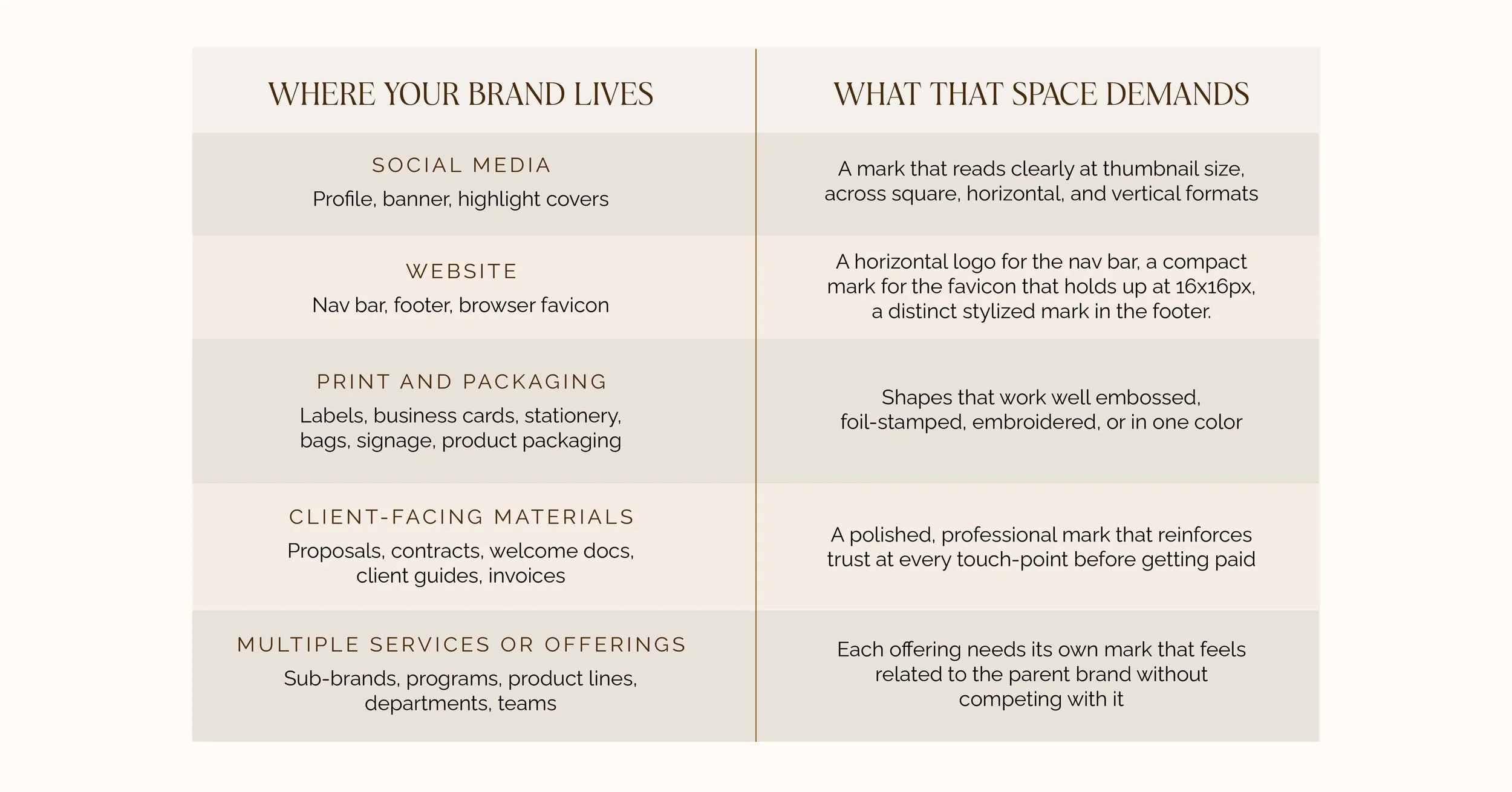
The right brand system is built around where you actually show up as a business. That's the conversation we start with on every brand project.
Consistent colors and fonts are what make a brand feel cohesive
A common mistake DIY brands with no system in place make is using different colors or fonts depending on the platform or the mood of a given post. It seems harmless in the moment, but it chips away at recognition over time.
A few things that help:
Hex codes are the most practical tool for color consistency. A hex code is a six-character universal color identifier (starting with #) that can be entered into virtually any design program, website builder, or template to reproduce your exact color every time.
Fonts take a little more planning, since some platforms restrict which ones they support. A designated backup font with a similar look and feel to your brand fonts helps preserve the visual language even in constrained environments.
For example, if your primary font is a clean sans-serif, your backup should also be a sans-serif — not a script or decorative font that breaks the overall feel.
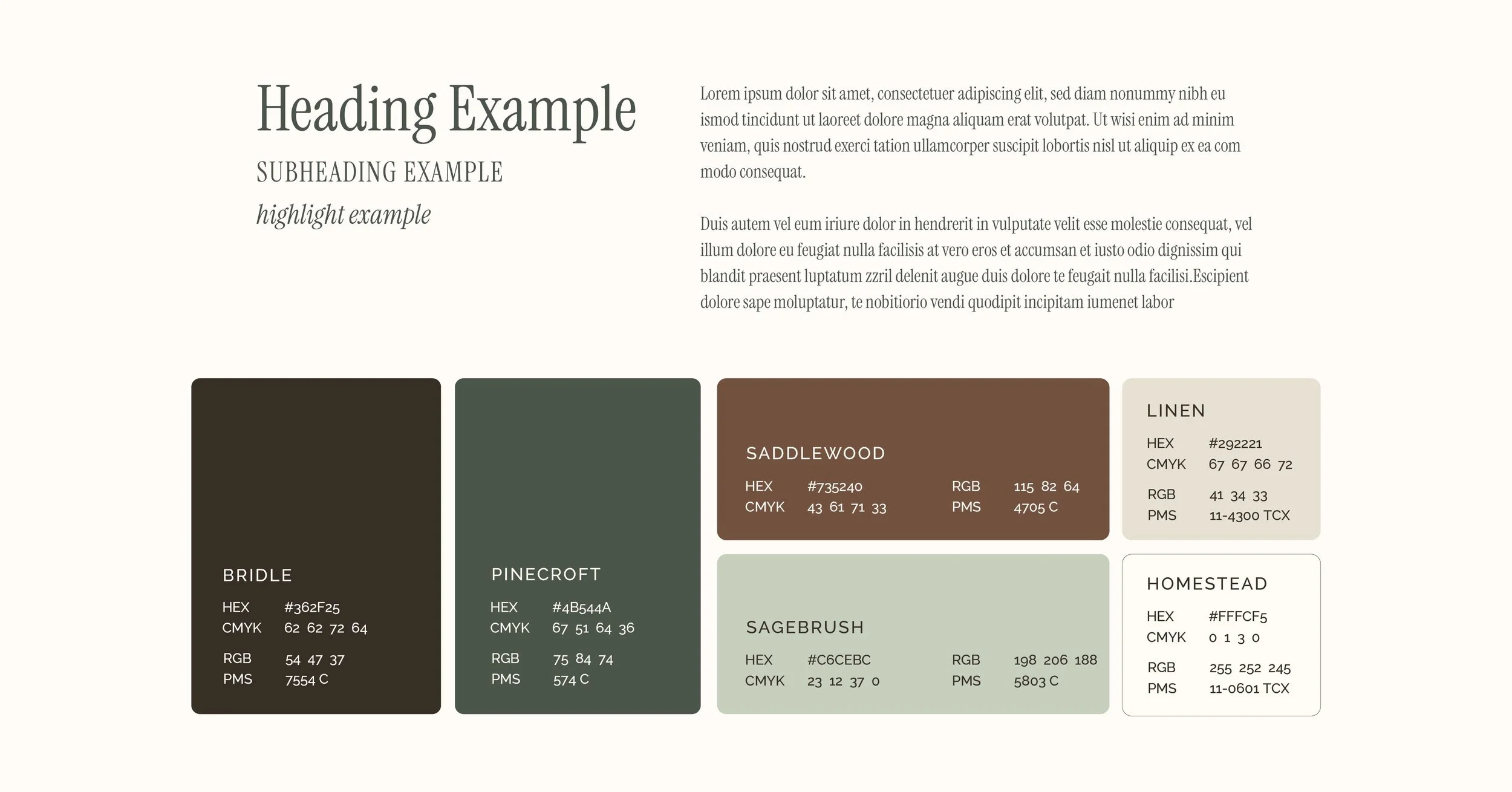
An example of a typeface palette and sample visual hierarchy, and a color palette with Hex, CMYK, RGB, and Pantone values.
What brand guidelines actually do
A brand guide is the document that holds the system together. It gives you and anyone else who touches your brand a clear, shared reference for how to use everything correctly.
At minimum, guidelines cover:
Colors — hex codes, RGB, and CMYK values, plus recommended color combinations
Fonts — names, recommended weights, a visual hierarchy example, where to download them, and backup options
Logos — which logo to use where, recommended spacing, and common misuses to avoid
More comprehensive guidelines go further, covering brand voice, photography style, and detailed usage rules for each element. That level of depth is most valuable for businesses with a team of more than three or four people, or those who regularly work with outside vendors or contractors.
A logo gives your business a face. A brand system gives it a language.
In order to have a brand that can adapt to all the spaces your business shows up, while maintaining recognition, you need a system and guidelines on how to use it properly. Together, your colors, typography, and logos can communicate the same message everywhere, which builds trust and drives sales.
Frequently Asked Questions
What’s included in a brand identity system?
A brand identity system typically includes a primary logo and secondary mark (at minimum), a defined color palette with exact hex codes, a typography pairing of one to three fonts, and a brand guide that explains how to use all of it correctly. More robust systems may also include patterns, textures, icons, a photography style guide, or sub-brand marks—depending on how many places the brand needs to show up.
Why do I need more than one logo?
A single logo can't adapt to every space it needs to live in. Your primary logo might look great on a website header but become illegible as a small Instagram profile photo or a browser icon (favicon). Most businesses need at minimum a primary logo, a compact brand mark, and a stacked or square version so the brand stays recognizable no matter where it appears.
What are brand guidelines and do I actually need them?
Brand guidelines are a document that tells you and anyone else who touches your brand exactly how to use your visual system: which colors to use together, which logo to use where, what fonts go at what sizes, and common mistakes to avoid. You need them the moment anyone other than you is creating content for your brand: a social media manager, a web designer, a printer, or a contractor. Without guidelines, misalignment is inevitable.
What is a hex code and why does it matter for brand consistency?
A hex code is a six-character color identifier (starting with #) that can be entered into virtually any design program, website builder, or Canva template to reproduce your exact brand color every time. Without hex codes, colors drift, and you end up with slightly different shades across your website, social media, and printed materials. Over time that inconsistency chips away at brand recognition.
How is brand strategy different from brand design?
Brand strategy is the thinking that happens before the design: defining your target audience, your positioning, your brand personality, and what makes you distinct from competitors. Brand design translates that strategy into a visual system. Good brand identity design is rooted in strategy—without it, the result may look nice but won't necessarily attract the right clients or communicate what your business actually stands for.
Think it may be time to build a brand system? Book a consult call here.
Aliya Mooney is a brand identity designer and strategist based in Boise, Idaho, and the founder of Hearthstone Creative. With a B.A. in Advertising and a background in in-house design, boutique agency work, and brand strategy, she works with established small business owners and values-driven founders to build brand identities that are strategic, intentional, and built to last. Learn more about Aliya here.